
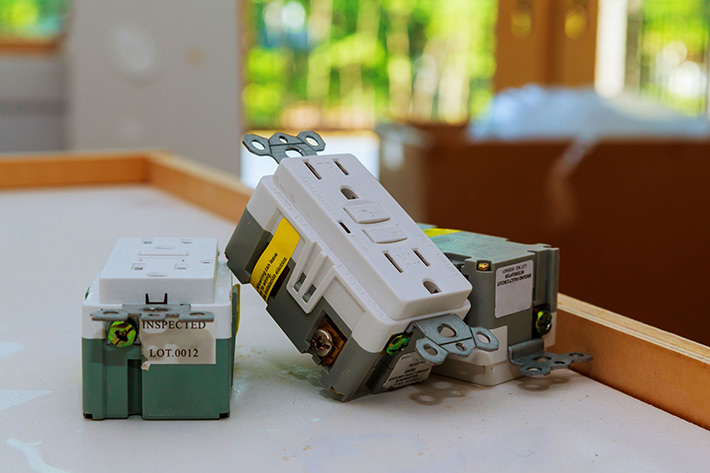
Electricity is something most of us take for granted until something goes wrong. Whether it’s a blown fuse, a tripped breaker, or something more serious, the risks associated with electrical problems can be significant, especially around water. That’s where GFCI outlets come in.
GFCI stands for Ground Fault Circuit Interrupter, and it’s one of the simplest and most important safety features in your home’s electrical system. In fact, if your home doesn’t already have GFCI outlets installed in key areas, it’s likely overdue for an upgrade.
Let’s break down what GFCI outlets are, how they work, where they’re required, and why they’re an essential part of any safe, code-compliant home.
What is a GFCI outlet and how can an electrician help?
A GFCI outlet protects people from electrical shock by quickly cutting power when it detects an imbalance in the electrical current.
In a typical electrical circuit, current flows from the hot wire to the neutral wire. A GFCI monitors this flow and, if it detects even a small difference (as little as 4 to 6 milliamps), it trips the circuit in a fraction of a second. This usually means the electricity is leaking somewhere—often through a person who has come into contact with water or a faulty appliance.
Unlike a circuit breaker, which protects the wiring in your home, a GFCI is designed specifically to protect people from electric shock. An electrical contractor can get your home’s electrical safety in check with the appropriate upgrades, including outlets.
How GFCI Outlets Work
Think of a GFCI outlet as a fast-acting lifeguard for your electrical system. If everything is functioning correctly, electricity flows in a closed loop between hot and neutral. But if something goes wrong, like water getting into a hair dryer or someone touching a faulty appliance while standing on a wet floor, the current may begin to leak.
The GFCI detects a leak and immediately shuts off power to the outlet, stopping electricity before it can cause serious harm. This is especially important in areas where moisture is present, since water is a powerful conductor of electricity.
You can recognize a GFCI outlet by the “Test” and “Reset” buttons between the two plug receptacles. These buttons allow you to check the outlet’s function and reset it after a trip.
Where Are GFCI Outlets Required?
The National Electrical Code (NEC) has increased GFCI requirements over the years. Today, GFCI protection is required in the home where water is likely to be present. This includes:
● Bathrooms
● Kitchens (especially near sinks)
● Laundry rooms
● Garages
● Unfinished basements
● Outdoors (including outlets on decks, patios, and near pools or hot tubs)
● Crawl spaces
● Utility rooms
In older homes, these areas may not have GFCI outlets installed, especially if the electrical system hasn’t been updated in the last 20 to 30 years. Even if your home isn’t required to be brought up to code, it’s still smart—and in many cases, strongly recommended—to install GFCIs in these zones.
Why Every Home Needs GFCI Protection
1. They Save Lives
The most important reason for installing GFCI outlets is simple: they can prevent fatal electric shock. According to the Electrical Safety Foundation International (ESFI), hundreds die each year from accidental electrocutions in the U.S. alone. GFCIs significantly reduce that risk, especially in bathrooms and outdoor areas.
2. They Prevent Fires
Faulty wiring and current leakage are common sources of electrical fires. GFCIs prevent overheating and reduce the risk of electrical fires.
3. They Protect Your Family and Guests
Whether it’s a child plugging in a hair dryer or a guest using your backyard outlet for a power tool, GFCI protection provides peace of mind. It’s a simple step that safeguards everyone who lives in—or visits—your home.
4. They’re Inexpensive and Easy to Install
GFCI outlets are affordable and relatively easy for a licensed electrician to install. In most cases, one GFCI outlet can protect several others downstream on the same circuit. This makes them a cost-effective upgrade with major safety benefits.
How to Know If Your GFCIs Are Working
GFCI outlets are not maintenance-free. Like smoke detectors, they need to be tested monthly to ensure they’re functioning properly.
To test:
1. Plug a small appliance (like a nightlight) into the outlet.
2. Press the Test button—the appliance should turn off.
3. Press the Reset button—the appliance should turn back on.
If the outlet doesn’t respond as expected, it may be faulty and should be replaced by a licensed electrician.
Wayne’s Trusted Electricians for GFCI Safety
Many homeowners don’t think about electrical safety until something goes wrong. But when it comes to electricity, prevention is everything. GFCI outlets are one of the most effective methods to reduce risk in your home.
If you’re unsure whether your home has proper GFCI protection, or you’ve noticed that some outlets are outdated or unresponsive, it’s time for a professional inspection. At Bratcher Electric, our electrical services help homeowners throughout Wayne and Southeast Michigan bring their electrical systems up to modern safety standards. Call and speak to an electrician today.