
Are you tired of replacing blown fuses every time you run the microwave and dryer at the same time? For homes built pre-1960’s, this is a common occurrence and can be both frustrating and tiresome.
So, why don’t homes built post-1960s have to deal with this problem? Why do your neighbors or relatives never have to replace fuses?
The answer is simple. It’s because these homes use modern circuit breaker boxes instead of fuse boxes to protect their electrical output.
What’s the difference between a fuse box and a breaker box?
Here are the key differences between fuse boxes and breaker boxes and why an upgrade is essential to your home’s safety and efficiency.
Fuse Box vs. Breaker Box
While both a fuse box and a breaker box serve the same purpose, they do so in different ways. This purpose is to protect your home’s electrical system from overloading, short circuiting, or causing a fire.
A fuse box is an older system that uses fuses to interrupt the flow of electricity when it becomes too much for the system to handle. Fuses are small devices composed of either glass or ceramic that melt when overheated. For this reason, homeowners must often replace them when they “blow.”
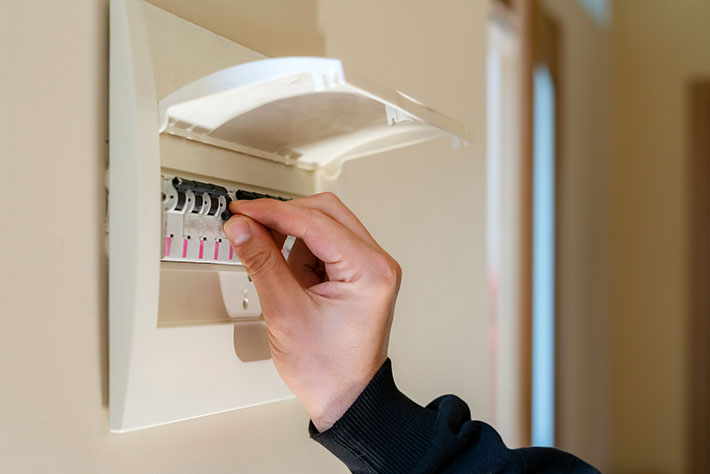
A breaker box, on the other hand, is a more modern system. It uses switches, also known as breakers, that cut off power when the system overloads or there is a short circuit. This is known as a “breaker trip.” One benefit of a breaker box over a fuse box is that when a breaker trips, all you have to do is reset it instead of replacing it.
Pros of Using a Breaker Box
While both these systems do protect your home from electrical catastrophe, there are some real benefits to having a breaker box:
Convenience
As we already discussed, when a breaker trips, all you need to do is reset it to restore the flow of electricity. It is as simple as flipping a switch. A fuse box, however, requires homeowners to physically remove and replace the fuse. They must also know the exact type of fuse and amperage to find a replacement.
Safety
As breaker boxes have become the standard in modern times, they are more equipped to meet modern safety needs as well as handle increased electrical loads. For instance, they often have ground fault circuit interrupters (GFCIs) and arc fault circuit interrupters (AFCIs) that guard against electrocution and fire. In addition, a circuit breaker detects overloads or short circuits almost instantly, tripping the breaker to end the flow of electricity. They are able to trip faster than fuses can melt.
Designed for Modern Power Demands
Today’s homes use far more electricity and appliances than homes built when fuse boxes were the standard. As such, it is rare that a fuse box can handle this amount of electricity a home uses without blowing a fuse regularly. Breaker boxes, though, are designed to handle the extra loads, reducing the frequency of tripped circuits and power interruptions.
Easier Upgrades
Unlike fuse boxes, which are already outdated, breaker boxes make it simple and easy to upgrade your home for the future. Remodeling, adding an HVAC system, or even acquiring additional appliances mean that the electrical capacity of your home will go up. With a breaker box, electricians can easily add new circuits to accommodate these additional loads.
Consider Replacing the Old with the New
If your home was built before 1960, you experience blown fuses or flickering lights often, or are expanding your home or its appliances, it may be time to upgrade from a fuse box to a breaker box. Not only will you have better electrical capacity to keep up with your family’s busy lives, but you will also have better peace of mind knowing your home is protected against electrical catastrophes and fire hazards.
Upgrade your Home with Expert Electrical Services
However, keep in mind that replacing your electrical panel is not a DIY job. If installed incorrectly, it could cause a fire, damage your home’s entire electrical system, or even lead to serious injury. That’s not to mention upgrading electrical panels requires adhering to strict electrical code requirements and obtaining the proper permits.
Instead, rely on the licensed and certified electricians at Bratcher Electric in Wayne. We have been upgrading electrical panels safely for over 5 decades and have the experience necessary to accommodate any load capacity needs.
Homeowners and businesses across Southeast Michigan rely on our trusted electrical services. Call today!